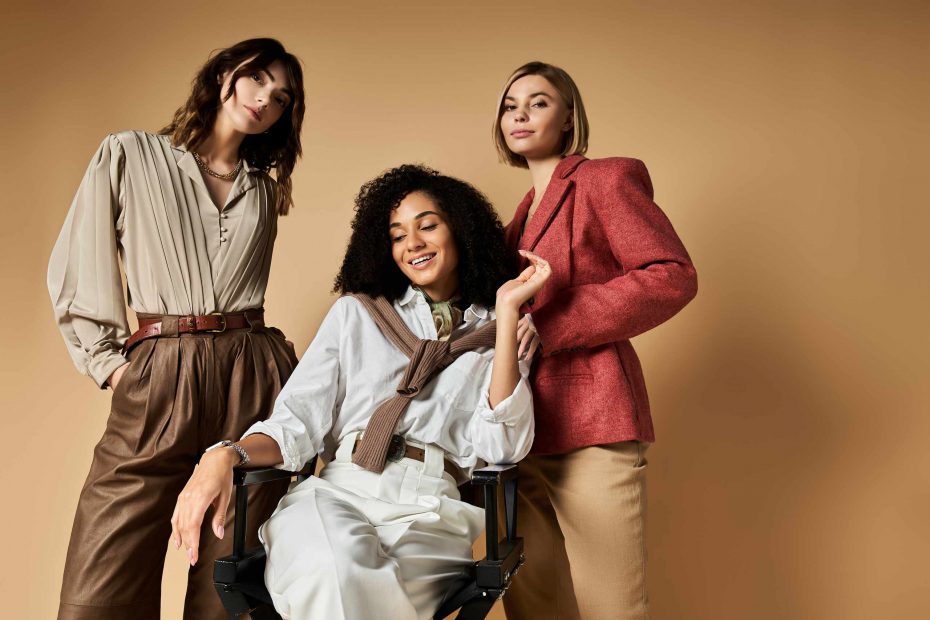
One single wardrobe staple can convey more lessons than a brand-new shopping bag. A straightforward knit, a pair of straight pants, a plain white shirt, a dark-colored skirt, a neutral dress, etc., provide a dependable starting point, allowing you to observe more clearly what changes when you vary the layers, shoes, color, or accessories. This approach doesn’t require you to look at your whole closet. Instead, focus on just one staple to look at it in more ways.
Find a garment you can comfortably wear. It doesn’t have to be a show-stopper, a new item, or fashion-forward. Actually, it is usually best to select something understated (black tee, denim, beige pants, beige knit cardigan, skirt with a clearly structured silhouette). Try on the item before anything else and take a moment to examine the shoulder fit, waistline, hem length, and how the fabric flows. This is your initial look.
Now, create your first ensemble. Style the piece in a straightforward, everyday manner. Combine it with a coordinating garment, neutral shoes, and if necessary, one layer (a light jacket, a cardigan, etc.). Notice if the outfit has a balanced feel without much extra styling. If the base garment is a looser fit, you may need to select a slightly more rigid piece of footwear or an outer layer to add structure. If your base garment is a fitted silhouette, adding an outer garment with a bit of drape softens the look. This ensemble helps you understand how the garment performs when worn with common casual combinations.
Now, change the proportions to create your second ensemble. Perhaps you add a blazer, chunkier boots, a longer coat, a belt, or a more structured bag. Try not to swap out every aspect of the first ensemble. This second look is meant to illustrate how introducing one sturdier item changes the base outfit. A straightforward dress takes on a grounded quality when worn with boots. Straight-leg pants often look neater when paired with a shorter length jacket. Since the base item hasn’t changed, this exercise should help you understand proportion better than just staring at the outfit in a single mirror.
Now, try out the third ensemble by changing the color scheme or adding an additional focus area. You can incorporate an accent color, a printed scarf, a pair of brighter shoes, or jewelry that is meant to attract attention. Novice fashionists often overload their look with several “interesting” items at a time and then ask themselves why the outfit feels like it’s shouting. Try to have one detail lead the way in the third ensemble and keep other details more subdued. Does the color choice enhance your outfit, or does it clash with the fit, pattern, print scale, texture, or occasion?
Take a photo of all three of your combinations on your phone from front and side angles. Seeing all three photographs together often gives more insight than looking at each combination in the mirror. Review your photos to compare hemlines, sleeve lengths, shoe types, waist definition, and accessory placement. For each look, write one short descriptive comment like: “suitable for running errands,” “jacket looks too long,” “belt looks good on waist,” or “the accent color works better with neutral shoes.”
This exercise also helps you make better clothing choices in the future. Should you find that a particular base item only fits in one specific wardrobe combination, you may need to take the time to determine why that is the case before buying any other pieces like it. If it fits into several different outfits, you can use it more freely to build a go-to outfit template for busy mornings. What matters is that you don’t need to walk the runway in order to feel satisfied. This exercise just helps you see what garments are already doing well for you, what details make one outfit different from another, and what your wardrobe is actually missing.