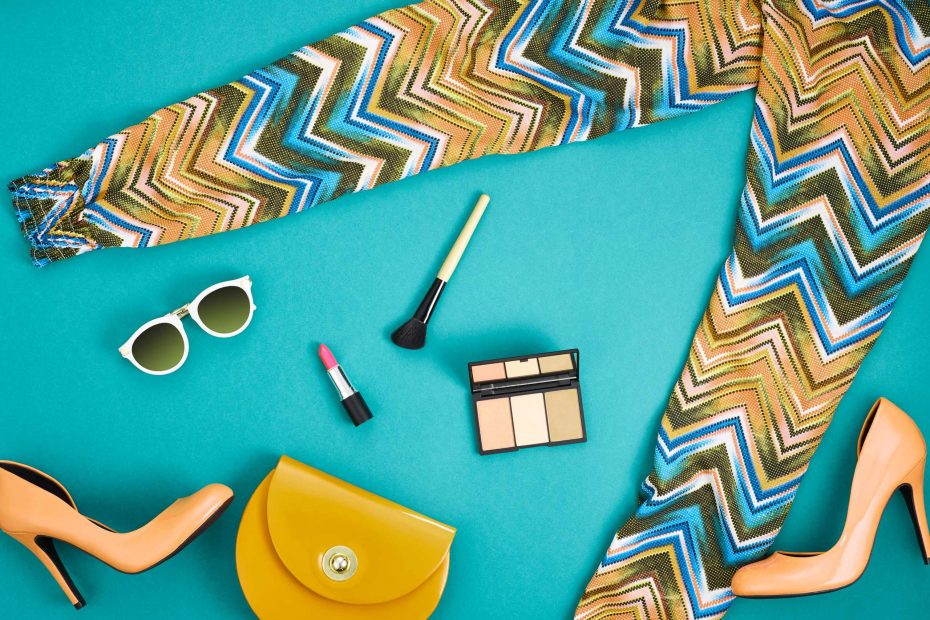
Looking in the mirror is helpful, but even if every piece is appealing, you might not fully grasp why the outfit feels overwhelming. The blouse has a pattern, the belt features an oversized buckle, the shoes are in a vivid color, the handbag exhibits a prominent texture, and the earrings are striking. On their own, there is nothing incorrect with any of these items; the issue is that the eye does not settle.
A focal point is the piece of your ensemble that draws your attention first. It may be a specific color, pattern, jewelry, shoe style, garment, handbag, or the striking difference between the two clothing pieces in question. Having a clear focal point can help the outfit look planned out; if there are many focal points, the look may feel messy, even if the silhouette of the outfit is fine and the individual items are all helpful on their own.
You should do a first glance check. Wear the full look, step back away from the mirror, look away, and look again. What is it that you see first? If your gaze lands on the red shoes, and then looks elsewhere to see the outfit, this will tell you that it is likely obvious where your focal point is. If your gaze moves back and forth between the pattern, the belt, the bag, the earrings, the hem, it may need one item that has a quiet appeal.
In this case, size of the pattern is critical. A tiny pinstripe, muted pattern, or light pattern may seem as if it were a basic, while a giant floral pattern or graphic design seems more likely to draw a large amount of eye. For instance, if a printed blouse is the major highlight of your look, you may combine it with a colorful purse, necklace, shoe color, and belt that have a pattern or detail and your ensemble will feel cluttered. Let the pattern stand, and select the other items in less vivid tones, softer textures, or simpler shapes.
For people who are new to fashion, accessories will be the likely area where they will have multiple distracting items in an ensemble. A scarf, necklace, belt, purse, and earrings may all appear nice on their own, but all together, they may look like too many distractions. If you find you need to do something, rather than just trying random choices, try making one change at a time. If you were to take the necklace away and look again, you would see your outfit has changed; if you swapped your purse for a neutral shade, your outfit would change; if you wore a simpler shoe shape, your outfit would change, and you would watch whether your outfit became more visible.
Color may also serve as an invisible focal point for the outfit. A strong shade that is next to your face; a light shade on your shoes beneath a pair of dark pants; a belt that contrasts sharply across your waist; if you were to have all or many of them in different parts of your outfit, your outfit may look confusing, as it could be if you had chosen them intentionally to have your attention. One useful outfit formula is to have one focal point or feature; one feature that will stand out as the secondary; the rest should remain muted, so that the ensemble is cohesive in its general shape.
The next time you put on an outfit and it looks a bit too noisy and busy yet, rather than starting from the beginning, identify what your most prominent feature is and then determine whether or not you want it to take the spotlight. If you want it to, try reducing the amount of other competing features. If you want it to be secondary, try finding something else that will take more of your attention. A good ensemble does not have to be boring; it simply needs to be organized enough so that you can see the best feature of the ensemble.